-
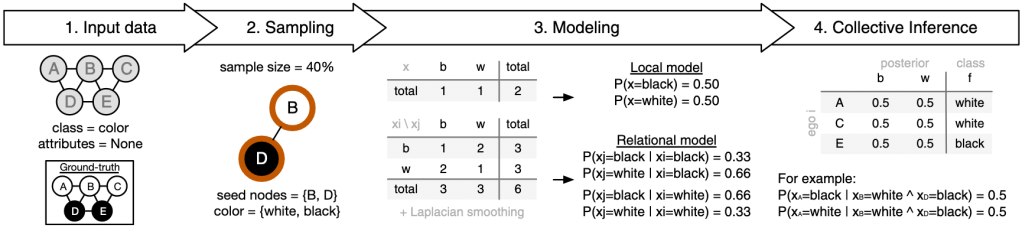
Social networks are very important carriers of information. For instance, the political leaning of our friends can serve as a proxy to identify our own political preferences. This explanatory power is leveraged in many scenarios ranging from business decision-making to scientific research to infer missing attributes using machine learning. However,… Continue reading →
-
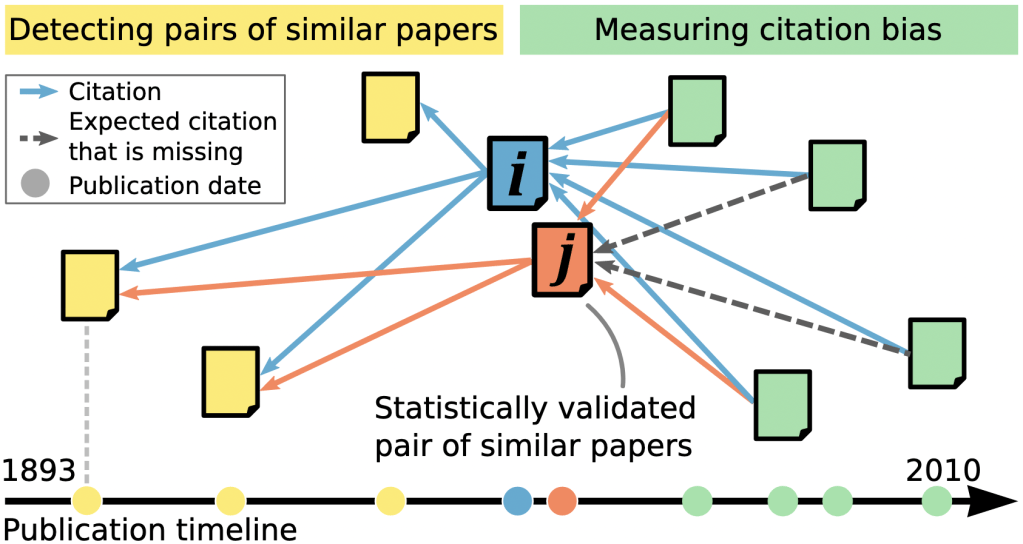
Mounting evidence suggests that publications and citations of scholars in the STEM fields (Science, Technology, Engineering and Mathematics) suffer from gender biases. In this paper, we study the physics community, a core STEM field in which women are still largely underrepresented and where these gender disparities persist. To reveal such… Continue reading →
-
In this review we discuss advances in the agent-based modeling of economic and social systems. We show the state of the art of the heuristic design of agents and how behavioral economics and laboratory experiments have improved the modeling of agent behavior. We further discuss how economic networks and social… Continue reading →
-
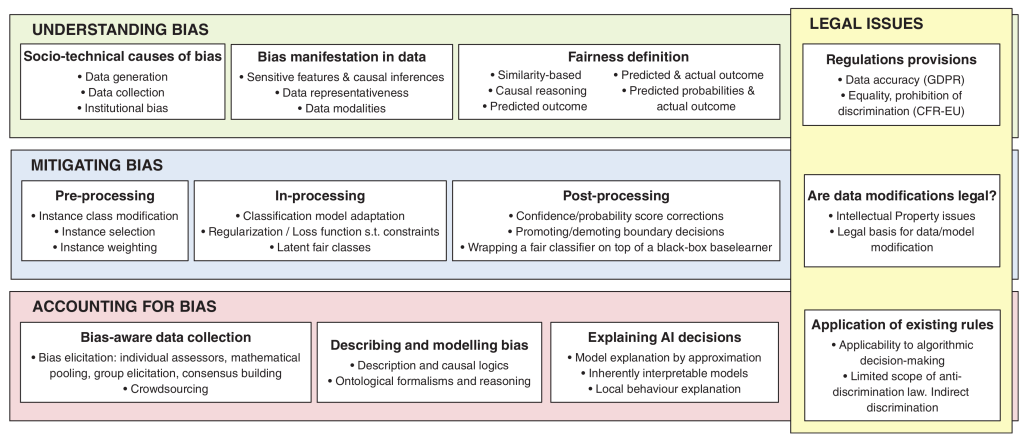
An introductory survey. Artificial Intelligence (AI)-based systems are widely employed nowadays to make decisions that have far-reaching impact on individuals and society. Their decisions might affect everyone, everywhere, and anytime, entailing concerns about potential human rights issues. Therefore, it is necessary to move beyond traditional AI algorithms optimized for predictive… Continue reading →
-

Social norms can facilitate societal coexistence in groups by providing an implicitly shared set of expectations and behavioral guidelines. However, different social groups can hold different norms, and lacking an overarching normative consensus can lead to conflict within and between groups. In this chapter, we present an agent-based model that… Continue reading →
-
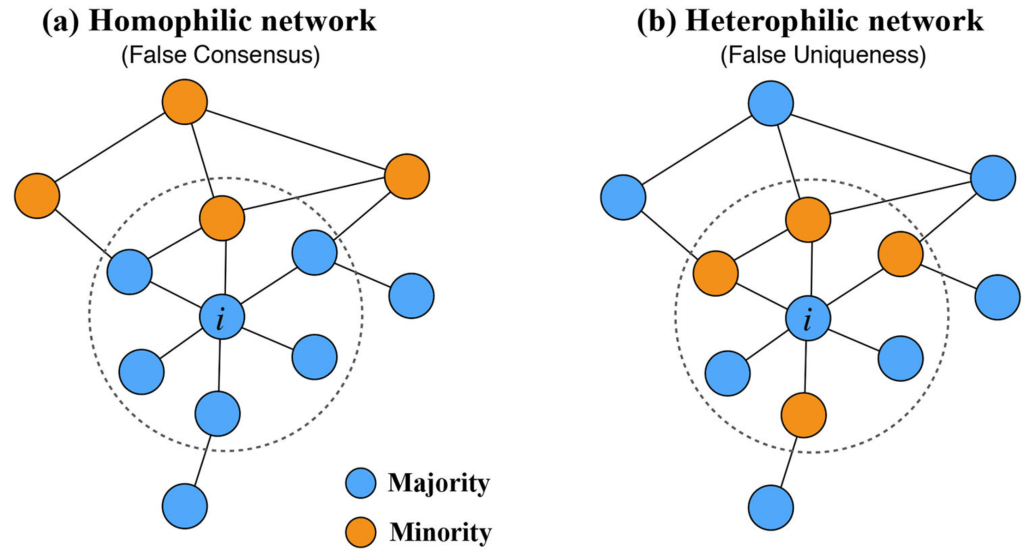
People’s perceptions about the size of minority groups in social networks can be biased, often showing systematic over- or underestimation. These social perception biases are often attributed to biased cognitive or motivational processes. Here we show that both over- and underestimation of the size of a minority group can emerge… Continue reading →


Network Inequality and Fairness Group
Computational Social Science Research

Welcome to the Network Inequality and Fairness Group! Based at TU Graz in Austria and led by Fariba Karimi, our research group uses computational and network approaches to examine pressing social challenges, including inequality, minority visibility, and algorithmic bias. Our work also explores how culture, information, and norms spread across online communities using models, data, and experiments.
Picture taken at the Group Retreat – July 2026
Connect with us!
Stay up to date!
Stay updated with our latest posts and lectures.