-
We’re excited to share two connected papers investigating bias in AI-recommended scholars, both featuring group members Fariba Karimi and Lisette Espín-Noboa! In the first, Daniele Barolo, Chiara Valentin, Fariba Karimi, Luis Galárraga, Gonzalo G. Méndez, and Lisette Espín-Noboa audited six open-weight LLMs on their ability to recommend physics experts, finding… Continue reading →
-

On 14–15 July 2026, we hosted the Workshop on Gendering Science at the Show Room of Data House, TU Graz — a joint workshop bringing together Computational Social Science and Gender Studies to build interdisciplinary bridges for studying the gender dimension within the scientific landscape. Participants gave short 5–10 minute… Continue reading →
-

We’re excited to share a new paper from Nicola Cinardi and Fariba Karimi, published in npj Complexity! The team built a network model where a group’s access to opportunities acts as a “fitness” factor shaping how the network grows. They find that structural marginalization — where disadvantaged groups get pushed… Continue reading →
-

We’re excited to share a new paper from Jan Bachmann, Lisette Espín-Noboa, Gerardo Iñiguez, and Fariba Karimi, published in Quantitative Science Studies! 🎉 The team studied brokerage in physics — when a scientist connects two colleagues who hadn’t collaborated before — and its effect on careers worldwide. They find that… Continue reading →
-

We’re excited to share a new paper from Jan Bachmann, Samuel Martin-Gutierrez, Lisette Espín-Noboa, Nicola Cinardi, and Fariba Karimi, published in Scientific Reports! 🎉 The team introduces PATCH, a network growth model that combines three classic linking mechanisms — preferential attachment, triadic closure, and homophily — to understand how they… Continue reading →
-

We’re excited to share that Samuel Martin-Gutierrez, Mauritz N. Cartier van Dissel, and Fariba Karimi have published a new paper in Communications Physics, introducing MAPS (Multidimensional Aggregation of Preferences in Social Ties) — a model for how people combine multiple identity dimensions when deciding who to connect with. 🎉 Validating… Continue reading →


Network Inequality and Fairness Group
Computational Social Science Research
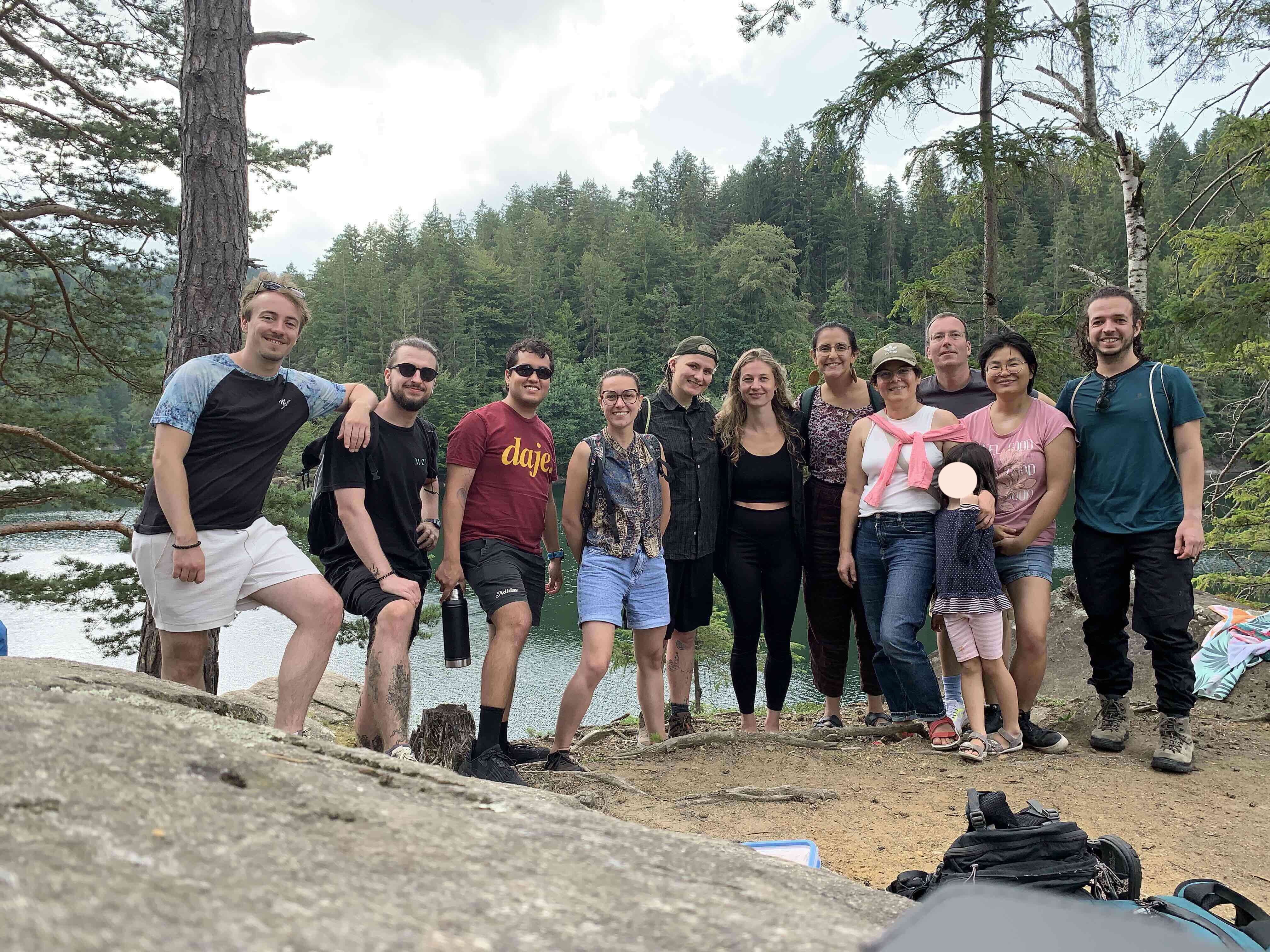
Welcome to the Network Inequality and Fairness Group! Based at TU Graz in Austria and led by Fariba Karimi, our research group uses computational and network approaches to examine pressing social challenges, including inequality, minority visibility, and algorithmic bias. Our work also explores how culture, information, and norms spread across online communities using models, data, and experiments.
Picture taken at the Group Retreat – July 2026
Connect with us!
Stay up to date!
Stay updated with our latest posts and lectures.

