-

We’re excited to share that Fariba Karimi co-authored a new Perspective in Nature Human Behaviour on how higher-order interactions shape collective human behaviour! Together with Federico Battiston, Valerio Capraro, Sune Lehmann, Andrea Bamberg Migliano, Onkar Sadekar, Angel Sánchez, and Matjaž Perc, the piece argues that traditional pairwise network models miss… Continue reading →
-

We’re excited to share that Samuel Martin-Gutierrez has published our latest work in Science Advances! 🎉 In collaboration with Mauritz N. Cartier van Dissel and Fariba Karimi, this study reveals how intersectional identities shape social networks, driving unequal patterns of connection and social capital. Using a network model calibrated with… Continue reading →
-

We’re excited to share that Mauritz Cartier van Dissel presented our latest work at ACM FAccT 2025 in Athens! 🎉 In collaboration with S. Martin-Gutierrez, L. Espín-Noboa, A. M. Jaramillo, and F. Karimi, we introduce a novel probabilistic definition of fairness for top-k selection in rankings, grounded in sampling without… Continue reading →
-
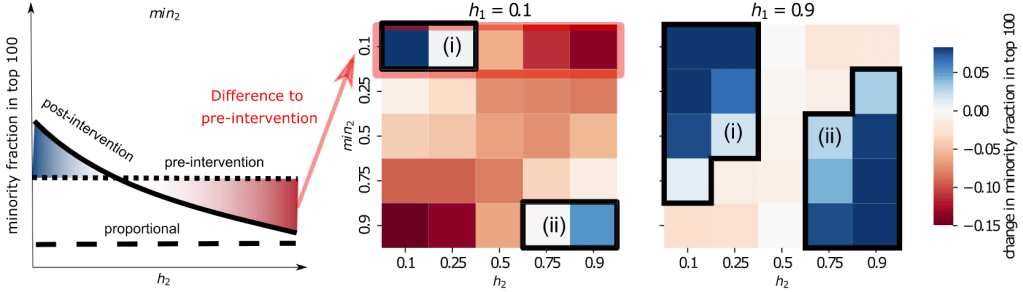
Improving the position of minority groups in networks through interventions is a challenge of high theoretical and societal importance. However, a systematic analysis of interventions that alter the network growth process is still missing. In this work, we propose a model to examine how network growth interventions impact the position… Continue reading →
-

In a recent study featured in SIAM news Fariba Karimi, Marcos Oliveira, and Markus Strohmaier examine how the interplay between space and time constraints, together with group mixing and size imbalance, can produce structural marginalization in face-to-face interactions. They used computational models of face-to-face interactions to consider the heterogeneity in… Continue reading →
-
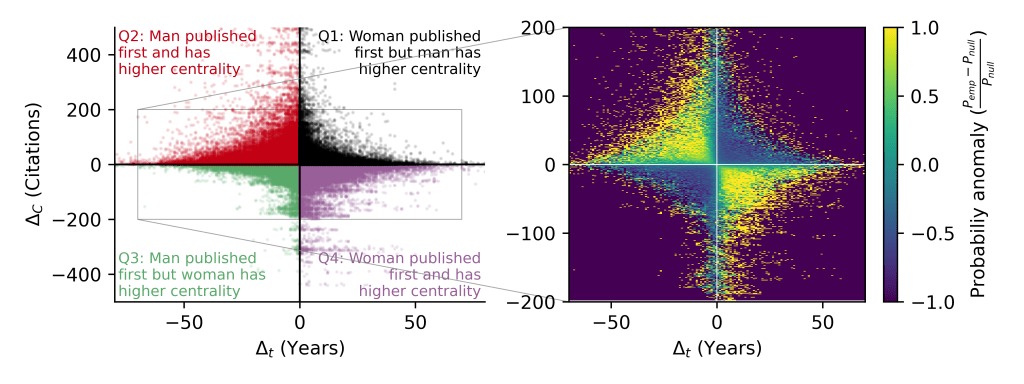
During a Cern workshop on gender equality in 2018 a professor of Pisa University said physics was “invented and built by men” and claimed that male scientists produced better research than female researchers. The controversy spurred Fariba, who has long been intrigued with the origins of gender disparities in STEM… Continue reading →


Network Inequality and Fairness Group
Computational Social Science Research
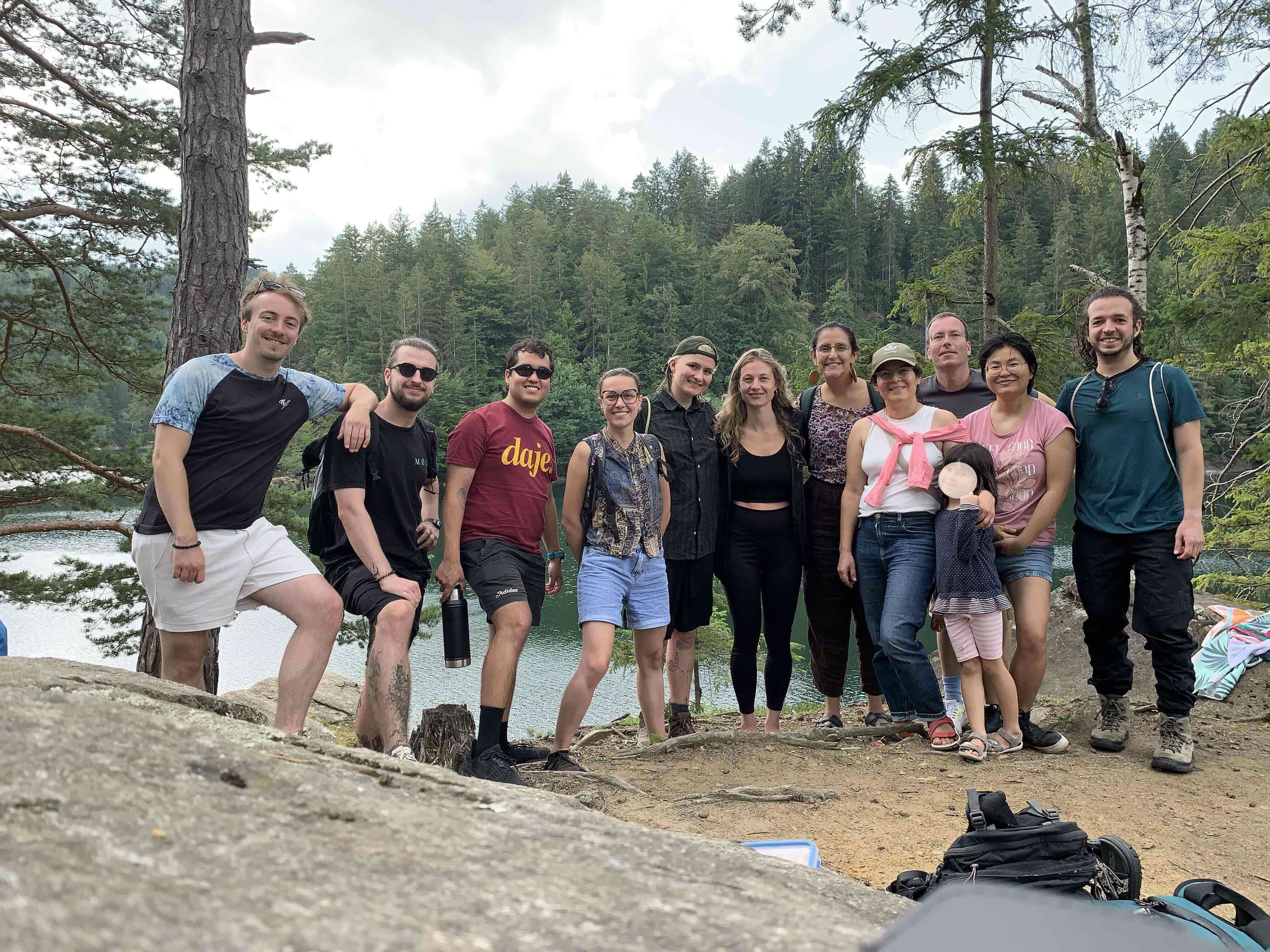
Welcome to the Network Inequality and Fairness Group! Based at TU Graz in Austria and led by Fariba Karimi, our research group uses computational and network approaches to examine pressing social challenges, including inequality, minority visibility, and algorithmic bias. Our work also explores how culture, information, and norms spread across online communities using models, data, and experiments.
Picture taken at the Group Retreat – July 2026
Connect with us!
Stay up to date!
Stay updated with our latest posts and lectures.